

Ads in ChatGPT went from an experiment to something any business can buy in under a year. OpenAI began testing them in the United States on February 9, 2026. On May 5 it opened a self-serve Ads Manager in beta, and self-serve access now covers businesses based in 89 countries.
This week brought two more changes. On November 9, OpenAI replaced its bid caps with average-cost targets. On November 10, it launched Businesses in ChatGPT, which lets a company claim its own profile. Agencies are already selling "ChatGPT ads management" on the back of all this. We don't sell ad management, so this guide has one job: to show you what you would be buying, what you wouldn't, and what the early numbers say.
You can rent the space under the answer. You can't buy the answer.
What are ChatGPT ads?
ChatGPT ads are paid, labeled placements that appear below a ChatGPT response. Each ad shows the advertiser's name and logo, a headline, a short description, an image and a link to a landing page. ChatGPT shows one ad unit at a time, and OpenAI is also testing a multi-image format that appears while an image is being generated.
Not everyone sees them. According to OpenAI's ads FAQ:
- Ads can appear for adults on the Free and Go plans, in countries where ads are live.
- No ads on Plus, Pro, Business, Enterprise or Edu accounts, on accounts identified as under 18, or in temporary chats.
- No ads near sensitive topics, including personal health, mental health and politics.
The answer and the ad are two separate things
The answer is earned
ChatGPT writes it from what it knows and what it finds on the web. Nobody can pay to be named, ranked higher or described differently.
The ad is bought
It sits below the answer with a label. It's chosen by a separate ads system, using relevance and the advertiser's bid.
OpenAI is direct about the separation. Its FAQ says ads "run on separate systems" from the chat model, and that seeing an ad doesn't mean OpenAI recommends the advertiser. By default ChatGPT can't even see the ad it is showing you.
How ChatGPT decides which ad to show
There are no keywords to bid on. OpenAI's advertiser guide says its system picks an ad from several signals:
- The topic and intent of the current conversation
- The ad's landing page, headline and description
- Context hints, which are short notes from the advertiser describing the conversations where the product is relevant. OpenAI says these aren't exact-match keywords and don't guarantee a placement
- Past chats and memory, but only for users who have ad personalization turned on
When several ads qualify, relevance and bids decide which one shows. You do control where a campaign runs. Standard campaigns can target countries and, where available, states, cities and postal codes, which matters for a local business.
Advertisers get totals such as views and clicks. They never see a person's chats, memories, name, email or precise location.
What ChatGPT ads cost
Here is what OpenAI's documentation says as of November 2026. The program is still in beta, so expect these to change.
| Item | What OpenAI says |
|---|---|
| Minimum budget | $25 a day per campaign in the U.S. Other currencies have their own minimum |
| How the daily budget works | It's an average over seven days. One day can cost up to twice the daily budget, and a week never costs more than seven times it |
| What you pay for | Valid clicks or impressions. Conversion campaigns still bill by click or impression, never per conversion |
| Suggested starting bid | $3 to $5 per click |
| Bidding | Since November 9, 2026, new campaigns use Target CPC, Target CPA or automatic bidding. The older bid caps retire on January 1, 2027 |
| Tracking | The OpenAI Pixel, a Conversions API, and ordinary UTM tags on your links |
Two details are easy to miss. At the minimum, one campaign costs roughly $750 a month. And a target is an average goal, not a ceiling. OpenAI's own example says a $50 Target CPA means some conversions will cost more and some less, and that the real average can land above the target.
What the early results show
OpenAI doesn't publish performance benchmarks. The best independent evidence so far is a working paper by Maximilian Kaiser of WU Vienna and Christian Schulze of the Frankfurt School of Finance & Management, released in October 2026. It draws on 1,898 online shops and close to 10 billion visits between June 2025 and August 2026.
Unpaid ChatGPT visitors bought about six times as often as visitors from ChatGPT ads
The study's other findings point the same way:
- A visit from a ChatGPT ad brought in $0.89 in revenue on average, against $2.45 for a visit from a Google search ad. That's 64% less.
- According to the Frankfurt School's summary, 82% of the 102 advertisers recorded no purchases at all from ChatGPT ads.
- The authors estimate a ChatGPT ad click would need to cost about $0.26 to match the return of Google search ads. OpenAI's suggested starting bid is $3 to $5.
- After ads launched, unpaid ChatGPT referrals to shops fell by roughly 6 to 8%. The visitors who still arrived bought at the same rate as before.
Read these numbers with care. This is a working paper that hasn't been peer reviewed. It covers online shops, not local services or B2B leads. And it measures a platform that is months old and changing fast, as this week's bidding update shows. Results may improve as OpenAI's matching gets better.
Our reading is simple. Someone who clicks a business ChatGPT named has been told that business fits what they asked for. Someone who clicks an ad has seen a placement. Those are different levels of trust, and so far they convert differently.
Three ways to show up in ChatGPT
Ads are now one of three ways a business can appear in ChatGPT, and they work best in a particular order.
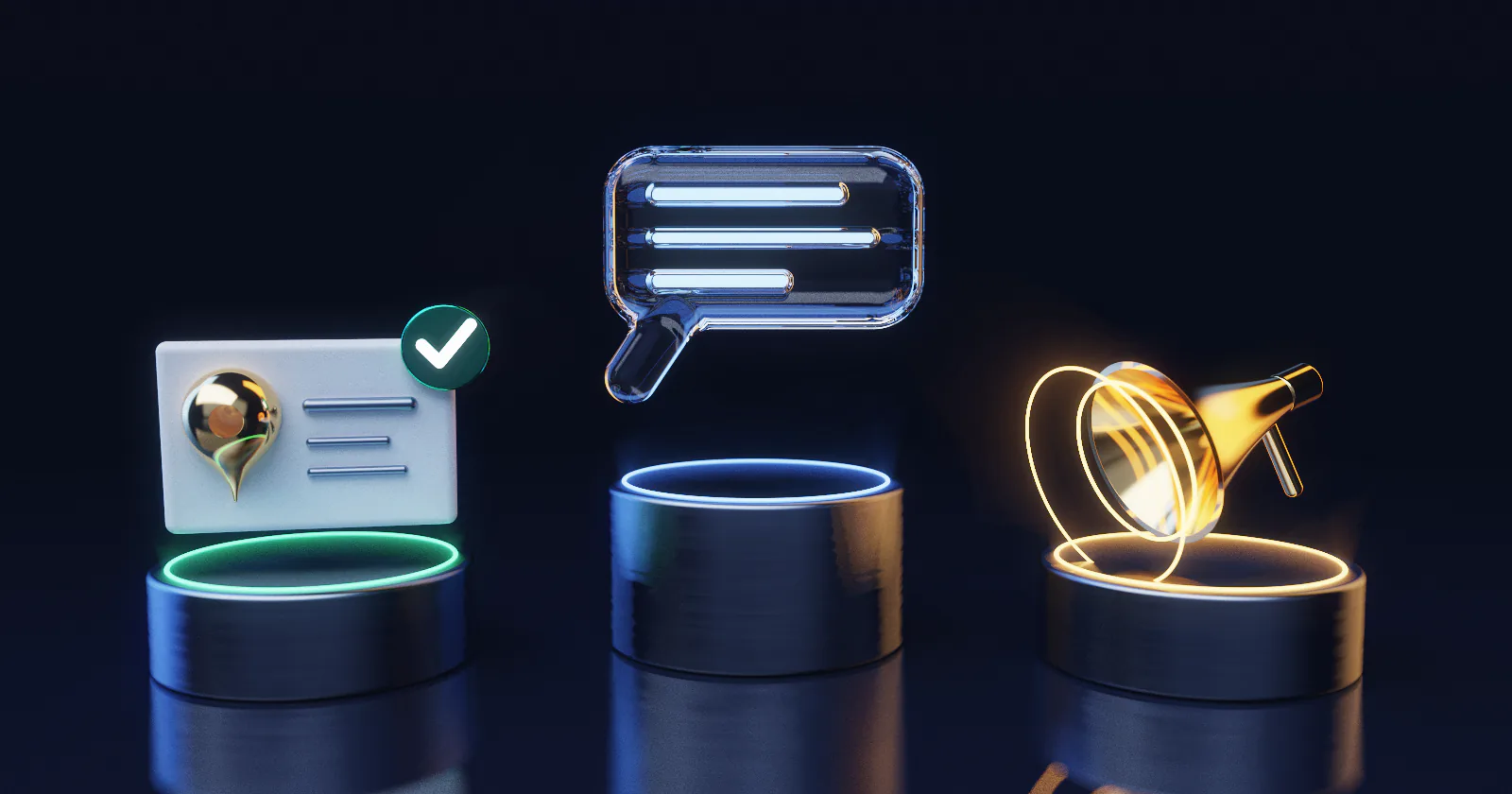
Earned, claimed and paid
1. The answer
ChatGPT names, cites or links your business in its response. It draws on your website and on what other sites say about you.
Earned. Can't be bought2. Your business profile
New on November 10, 2026. You claim your business, keep its details current and see how often ChatGPT mentions you.
Claimed. In beta3. The ad
A labeled placement below the answer, shown to Free and Go users when the conversation is relevant.
Paid. Stops when you stopThe answer is where trust is highest, and it's the part no budget can buy. It depends on whether AI crawlers can read your site, how clearly your pages answer real questions, and whether other websites mention you. Our guides on how ChatGPT chooses sources and getting your business to show up in ChatGPT cover that work.
The business profile is brand new. Businesses in ChatGPT lets a company claim its profile in a Business Hub, update key details, add a product feed and see how many mentions and website clicks it gets. OpenAI says any eligible business located where ChatGPT is available can claim one. Do this before you spend anything on ads.
The ad adds reach on top of the other two. It doesn't replace them.
Should your business buy ChatGPT ads?
Three starting points, and what we'd do in each
Earn the answer first
If ChatGPT doesn't mention you today, or your site blocks its crawlers, fix that before paying for the slot underneath.
Local services, clinics, firms, B2B
Run a small test
You sell online, your conversion tracking works, and you can spend about $750 a month for a while without needing it back.
E-commerce, online services, travel, education
You may not be eligible
Health, financial and legal ads need case-by-case approval. Health and financial ads are generally not allowed outside the U.S.
Dentists, clinics, advisers, law firms
One more limit matters for B2B. People on paid ChatGPT plans never see ads, and that includes everyone on a Business or Enterprise workspace. If your buyers use ChatGPT at work, an ad may not reach them. A mention in the answer still can.
How to run a low-risk test
If you're a good candidate, treat the first month or two as paid research, not a sales channel.
- Check that you're eligible. The business being billed must be based in a country on OpenAI's availability list, and your category must be allowed by its ad policies.
- Let OpenAI's crawlers in. OpenAI requires that OAI-AdsBot can reach your landing page, and recommends allowing OAI-SearchBot too. Check your firewall and CDN as well as robots.txt. Our guide to AI crawlers shows how.
- Set up tracking before you spend. Install the OpenAI Pixel or Conversions API, confirm real events are arriving, and add UTM tags so the visits show up in GA4. Our guide to tracking AI traffic in GA4 covers the analytics side.
- Send people to a specific page. OpenAI advises linking to the most relevant product or service page, not your homepage.
- Write several different ads. OpenAI recommends clear, benefit-focused copy with a distinct angle in each ad, plus context hints that describe the conversations you belong in.
- Start at the minimum and compare. Run a Clicks campaign at $25 a day for at least a month. Then compare your cost per lead or sale with Google Ads, and with the unpaid visits ChatGPT already sends you.
OpenAI's ad-review crawlers may visit your landing page with your tracking tags attached. Your analytics can count those visits as paid traffic, although OpenAI says they aren't billed as clicks. Don't judge a new campaign by its first few "visitors".
What ads can't do
- They can't change the answer. If ChatGPT recommends three competitors and your ad sits below, the reader sees both.
- They can't reach paying subscribers. Plus, Pro, Business, Enterprise and Edu accounts are ad-free.
- They can't build anything that lasts. The placement ends when the budget does. Content that earns a citation keeps working.
- They can't fix a site ChatGPT can't read. The same crawler access that ads require is what earned visibility depends on.
Before you spend, find out where you stand. Our AI visibility audit walks through how to check what ChatGPT, Gemini and Perplexity already say about your business.
We checked the details in this guide against OpenAI's documentation on November 11, 2026. ChatGPT ads are in beta and the rules change often, so confirm the current terms in Ads Manager before you commit a budget.
Want to be the answer, not only the ad under it?
Digital Relevance helps U.S. and Canadian businesses get named, cited and recommended by ChatGPT, Perplexity, Gemini and Google's AI features. Start with a free AI Search Snapshot to see what AI assistants say about you today, or see what our AI Search plan covers.
Get My Free AI Search SnapshotFrequently Asked Questions
Do ChatGPT ads affect what ChatGPT recommends?
No. OpenAI says ads don't influence ChatGPT's answers. Ads run on separate systems from the chat model, they are labeled, and advertisers can't shape, rank or change a response. Buying an ad puts you below the answer. It doesn't put you in it.
How much do ChatGPT ads cost?
In the U.S. the minimum daily budget is $25 per campaign, and OpenAI suggests starting click bids at $3 to $5. You pay for valid clicks or for impressions, never per conversion. The daily budget is a seven-day average, so a single day can cost up to twice that amount.
Who sees ads in ChatGPT?
Adults on the Free and Go plans, in countries where ads are live. People on Plus, Pro, Business, Enterprise and Edu plans don't see ads. Neither do accounts identified as under 18, or anyone in a temporary chat. Ads also don't appear next to sensitive topics such as health or politics.
Can a Canadian business advertise on ChatGPT?
Yes. Canada is on OpenAI's list of countries with self-serve Ads Manager access, as long as the business being billed is based there. Some new accounts can only advertise in their home country at first. Health and financial services ads are generally not allowed outside the U.S.
Are ChatGPT ads worth it for a small business?
It's too early to say yes for most. In the first independent study, visitors from ChatGPT ads bought far less often than visitors from Google search ads. A small, measured test makes sense for online sellers with working conversion tracking. Most local businesses will get more from being named in the answer.